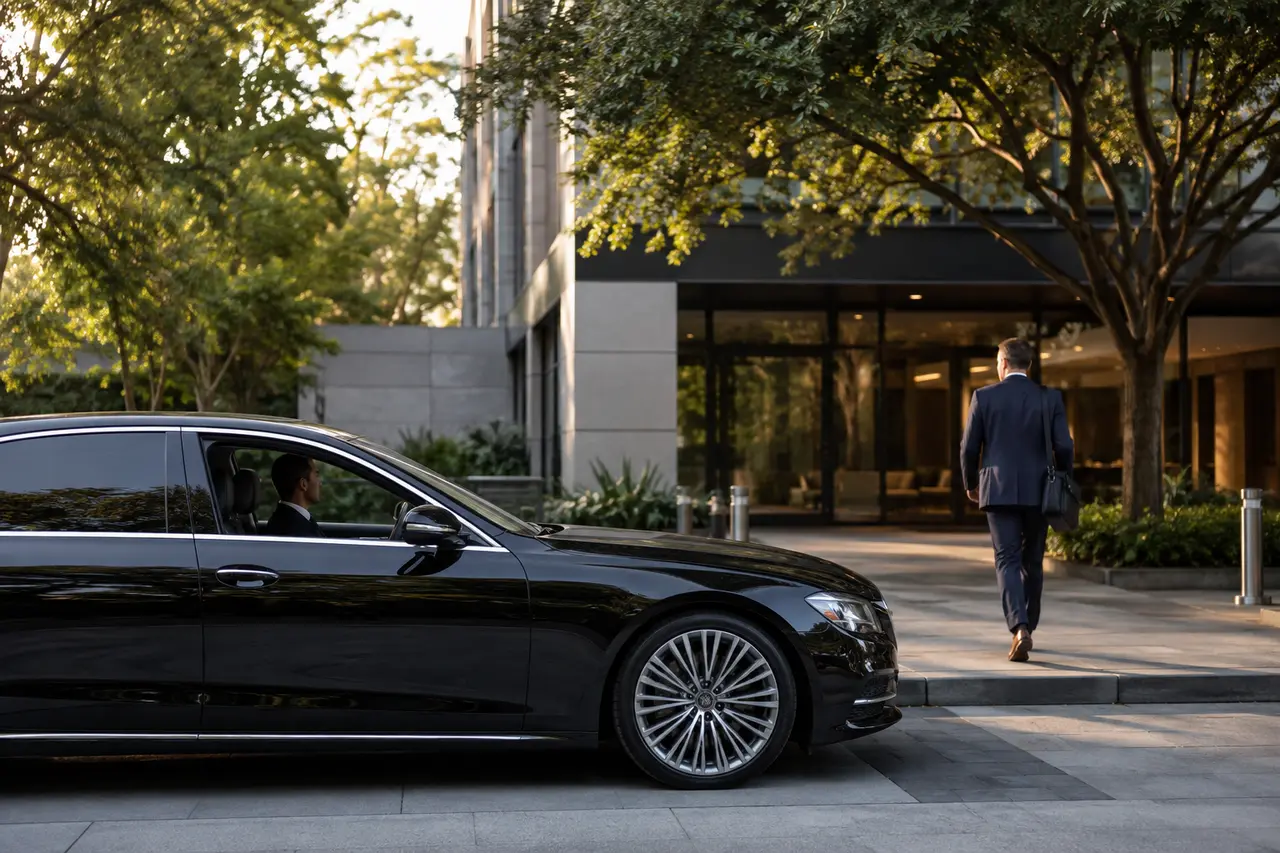
As directed means the vehicle stays with the day
Point-to-point service is designed around a defined pickup and destination. Hourly as-directed service is different: the vehicle remains available during the agreed window while the passenger moves between planned stops. That can be useful when a Palo Alto itinerary includes a hotel, Stanford, Sand Hill Road meetings, a private residence or a dinner reservation and the return time is not perfectly fixed.
The phrase as directed does not mean an unlimited or undefined itinerary. The request should still identify the primary route, the passenger profile, the vehicle category and the time the vehicle needs to remain available. A clear brief gives the chauffeur and reservations team a practical framework for the day.
The minimum block protects a usable operating window
Hourly service is planned with a three-hour minimum block. That minimum reflects the time required to position the vehicle, keep it available between stops and preserve the continuity that makes hourly service useful. A short single transfer is usually better handled as a point-to-point request, while a multi-stop schedule or a vehicle hold may justify the hourly format.
When requesting the service, share the expected start and end time even if the final stop may change. The team can then confirm the appropriate starting range, explain how additional time is handled and identify whether the itinerary should be treated as a longer corporate transportation request.
Palo Alto days often need room between commitments
A business day around Palo Alto can move from a hotel or office to Stanford, across Sand Hill Road and onward to a second Peninsula city. The value of a vehicle on hold is the ability to leave one meeting without starting a new transportation search. It gives the passenger a composed transition and gives the coordinator one request to manage.
The itinerary should distinguish firm times from flexible ones. A campus arrival or board meeting may have a fixed beginning. A coffee, internal conversation or short stop may have more room. That distinction helps the service protect the moments that matter while allowing the rest of the day to remain workable.
Choose the cabin for the way the vehicle will be used
An Executive Sedan works well for one or two passengers who want a discreet cabin between meetings. A Luxury SUV may be more useful when several people are moving together, when presentation materials or luggage are part of the day, or when additional cabin room supports a longer schedule. The right choice is the one that removes friction from the itinerary.
Review the fleet categories with the passenger count and luggage profile in mind. If the vehicle is primarily needed for airport movement, compare the request with airport transfers so the format matches the actual need rather than adding hourly time by default.
A good hourly brief is simple and specific
Include the start location, the expected operating window, the main stops, any known meeting times, passenger count, vehicle preference and the point where the vehicle will be released. Add details about Stanford buildings, office entrances, residence gates or event venues when they affect the handoff. If the day will extend, communicate that as soon as possible so availability can be reviewed.
Hourly service is most valuable when the schedule has movement, not when the traveler only needs a single ride. If the route is fixed and the vehicle is not needed between stops, a distance-based request may be the cleaner structure. The team can help distinguish the two when the itinerary is shared.
The calm comes from not restarting the day at every stop
A vehicle that remains available can preserve continuity when the passenger leaves one meeting and heads immediately to the next. There is no new pickup search, no need to explain the entire itinerary again and no uncertainty about where the next ride begins. That is particularly useful for a guest whose schedule is being managed by an assistant or host.
The format still benefits from boundaries. Give the team a realistic end time, communicate extensions before the original window closes and identify any destination that requires a special entrance or waiting instruction. The result is a more controlled day without making the itinerary feel over-engineered.